






How to Choose the Right Extruder Screen for Your Polymer Filtration Process
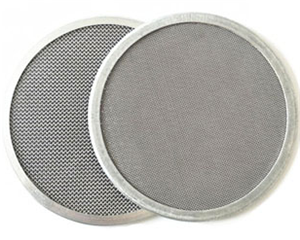
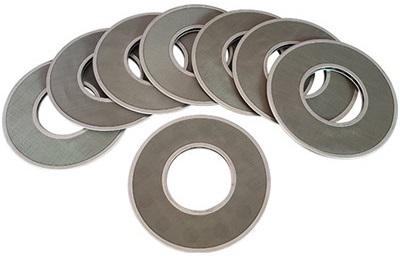
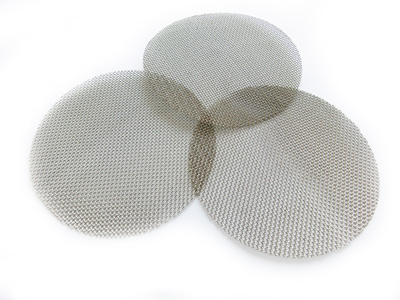
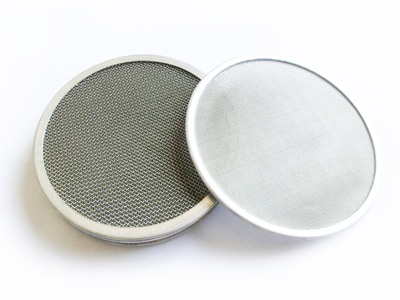
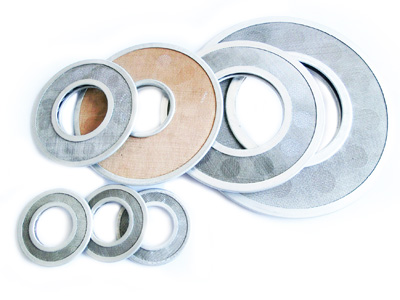
In polymer extrusion, extruder screens play a critical role in the melt filtration process. They ensure melt purity, eliminate contaminants, and protect downstream equipment (like dies and pumps) from damage. Choosing the right wire mesh specification is essential for balancing filtration efficiency, head pressure, and production uptime.
Owing to its exceptional mechanical durability, thermal stability, and corrosion resistance, stainless steel (primarily SUS304 and SUS316) serves as the global industry standard for extruder screen manufacturing.
Understanding Extruder Screen Mesh Sizes
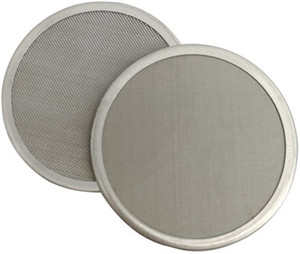
Extruder screen meshes typically range from 10 mesh to 500 more mesh. The optimal choice depends on your raw material quality and the precision required for the final product.
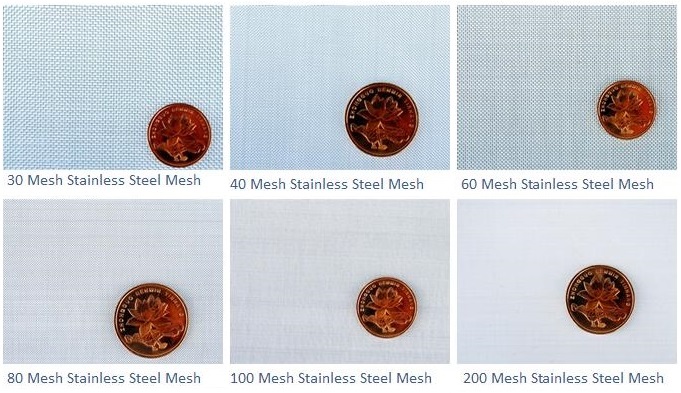
Coarse Mesh (10 to 30 Mesh): Designed to capture large contaminants, agglomerates, and unmelted pellets. They also provide foundational structural support in multi-layer screen packs.
Intermediate Mesh (40 to 80 Mesh): The standard range for general purpose filtration in compounding, masterbatch production, and sheet/film extrusion.
Fine Mesh (100 to 500 More Mesh): Utilized for high precision applications (such as blown film, spinning, and fiber production) to remove microscopic impurities and fish-eyes.
Square Weave Stainless Steel Mesh and Dutch Weave Stainless Steel Mesh: Which Do You Need?
While standard square weave wire mesh are sufficient for routine operations, specialized or high-pressure extrusion lines often demand a Dutch Weave Mesh.
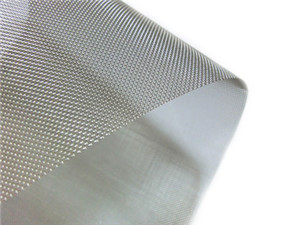
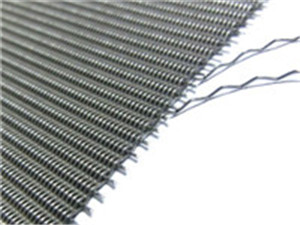
Feature | Square Weave Mesh | Plain Dutch Mesh |
Design Structure | Equal wire diameter and spacing in both warp and weft directions. | Thicker warp wires combined with thinner, tightly packed weft wires. |
Example Mesh No | 40 mesh, 80 mesh, 100 mesh | 24x100 mesh, 30x150 mesh |
Filtration Rating | Nominal filtration based on square openings. | Absolute, ultra-fine micron filtration. |
Mechanical Strength | Moderate; requires heavy support backing under high pressure. | High tensile strength; resists deformation without multiple backing layers. |
Primary Advantage | Cost-effective; high open-area percentage for optimal flow. | Maximizes throughput while maintaining extreme pressure resistance. |
Optimizing Your Screen Pack Arrangement
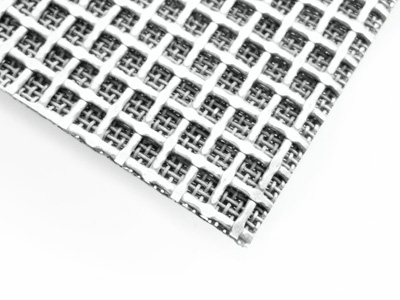
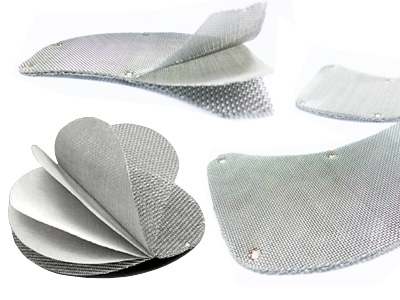
To extend the lifespan of your filtration system and prevent costly downtime, individual wire mesh screens are assembled into a strategic Screen Pack.
Technical Best Practice: Placing an ultra fine mesh directly facing the extruder screw causes rapid clogging and pressure spikes. Instead, the industry standard follows a progressive sandwich sequence to distribute the contaminant load and provide mechanical reinforcement against the breaker plate.
Standard 3-Layer Screen Pack Sequence:
Screw Side (Inlet): 40 Mesh (Coarse)
Role: Acts as a pre-filter to catch large debris and protect the finer layers downstream.
Middle Layer (Core Filter): 80 to 120 Mesh (Fine)
Role: Performs the critical, high-precision filtration of microscopic particles.
Breaker Plate Side (Outlet): 20 to 40 Mesh (Coarse/Support)
Role: Provides rigid structural backing to prevent the fine middle mesh from collapsing or experiencing blow-through contamination under high head pressure.
By engineered gradient layering, you optimize flow dynamics, maintain stable head pressure, and significantly prolong the service life of your extruder screens.