







How to Select the Ideal Wire Gauge for Demister Pads
In process gas separation, specifying a wire mesh demister (mist eliminator) requires balancing several critical design parameters. While process engineers frequently focus on vessel diameter and pad thickness, wire diameter is one of the most vital variables determining a demister pad's capture efficiency, structural integrity, and operational lifespan.Choosing the wrong wire diameter can lead to either costly liquid carryover (if the wire is too thick to capture fine droplets) or premature clogging and vessel downtime (if the wire is too fine for dirty process fluids).
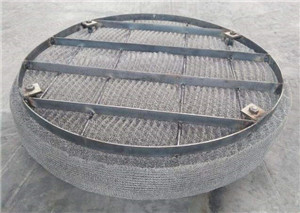
The Physics of Wire Diameter in Mist Separation
To understand why wire diameter matters, we must look at how a wire mesh demister captures entrained liquid droplets: Inertial Impingement.
When gas flows through the knitted wire mesh matrix, the gas streamlines bend around the wire strands. Heavier liquid droplets, unable to change direction as quickly due to their inertia, collide with the wires, coalesce into larger drops, and drain downward by gravity into the vessel sump.
Two physical metrics directly depend on the wire diameter
1.Specific Surface Area
The total surface area of wire available per unit volume of pad. For a given void fraction, specific surface area is inversely proportional to wire diameter:
smaller wire diameter dramatically increases the surface area available to intercept droplets.
2. Single Wire Target Efficiency
The probability that a droplet in the gas path will strike a single wire strand. Smaller wire diameters create narrower boundary layers, allowing fine micro-mists (smaller than 5μm) to strike the wire rather than flowing around it in the gas stream.However, finer wires reduce void space per layer and offer lower mechanical strength. Engineering a demister pad is always an optimization trade-off between capture efficiency, pressure drop and mechanical durability.
Demister Wire Diameter Specification Ranges
Demister pad wire diameters generally fall into three distinct ranges based on application demands:
1. Standard / General-Purpose Wire Diameter: 0.20mm - 0.28mm(0.008" - 0.0110")
The 0.20mm - 0.28mm range is the global industrial standard, representing over 70% of standard demister pad installations.
Performance Characteristics:
Efficiency: High collection efficiency (98% - 99%) for droplets 5 - 10μm and larger.
Pressure Drop: Excellent balance, maintaining a low pressure drop
Durability: Optimal balance of flexibility and structural rigidity.
Why Choose This Range?
It delivers the ideal compromise between material cost, filtration efficiency, hydraulic capacity, and service life. It is neither too delicate to deform under gas surges nor too coarse to allow significant liquid carryover.
Common Applications:
Steam drums and boiler knock-out pots
Standard gas scrubbing towers
Atmospheric oil & gas distillation columns
Water treatment evaporators & intake air mist removal
2. Fine Wire Diameter: 0.10mm - 0.20mm (0.004" - 0.008")
When process specifications demand ultra-pure gas streams or removal of sub-micron aerosols, finer wire gauge specifications are required.
Performance Characteristics:
Efficiency: Ultra-high separation efficiency (99.5%) capturing sub-micron and micro-mists down to 2 - 5μm.
Pressure Drop: Slightly higher resistance to gas flow due to higher surface density per volume.
Fouling Sensitivity: High surface density makes fine mesh susceptible to blinding if solid particulates, polymers, or high-viscosity liquids are present.
Why Choose This Range?
Finer wire strands dramatically increase the target collection efficiency for small mist particles that would otherwise slip around thicker wires.
Operational Requirement:
Fine wire demister pads require clean process gas streams. If used in dirty services, scheduled washing nozzles or upstream pre-filters must be implemented to prevent clogging.
Common Applications:
Fine chemical synthesis & pharmaceutical gas polishing
High-purity gas purification (e.g., electronic-grade specialty gases)
Hazardous mist capture (sulfuric acid mist, chlorine gas mist)
High-value solvent recovery processes
3. Heavy-Duty / Coarse Wire Diameter: 0.30 mm -0.55mm (0.012" - 0.022")
For demanding industrial environments involving high flow velocity, corrosive media, elevated temperatures, or heavy liquid surges, heavy-gauge wire is required.
Performance Characteristics:
Efficiency: Standard removal for larger droplets (>10 - 15μm).
Pressure Drop: Very low pressure drop with ultra-high open void volume (>98).
Fouling Resistance: Outstanding resistance to clogging, solid deposition, and viscous liquid accumulation.
Mechanical Strength: High resistance to physical wear, erosion, structural collapse under differential pressure surges, and chemical corrosion allowances.
Why Choose This Range?
In harsh environments, thin wire strands quickly erode, corrode, or deform. Thicker wires provide a higher corrosion/erosion allowance, giving the demister pad a significantly longer service life without requiring unscheduled vessel shutdowns.
Common Applications:
Offshore production separators subject to severe wave motion and gas surges
High-pressure natural gas knock-out drums
Heavy crude oil refinery vacuum towers
Dirty flue gas scrubbers with particulate entrainment
High-temperature waste gas treatment systems
Comparison Matrix
Wire Range | Wire Size | Target Droplet Size | Pressure Drop | Clogging Resistance | Primary Industrial Suitability |
Fine Wire | 0.10-0.20mm | 2-5μm | Moderate to High | Low (Requires clean gas) | Fine chemicals, pharma, acid mist recovery |
Standard | 0.20-0.28mm | 5-10μm | Low | Moderate | Steam drums, general scrubbers, distillation |
Heavy Duty | 0.30-0.55mm | >10-15μm | Ultra-Low | High (Handles solids/viscous liquid) | High-pressure gas, heavy oil, offshore, dirty gas |
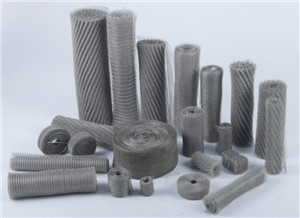
Custom Demister Manufacturing Solutions
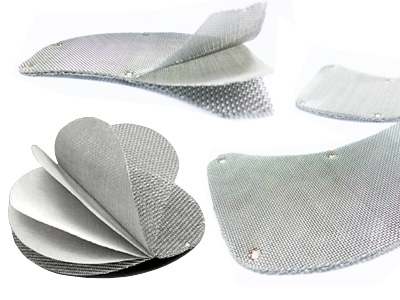
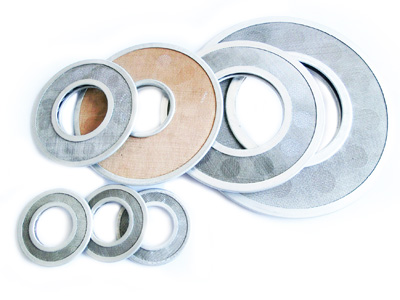
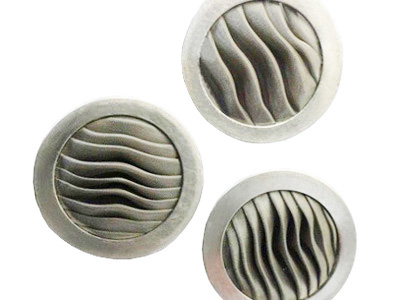
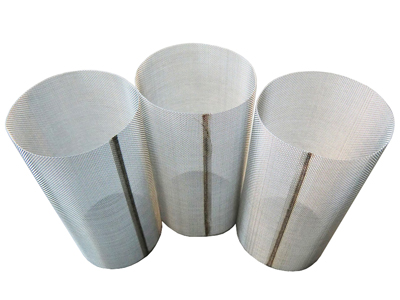
As a direct wire mesh demister manufacturer, we custom knitted wire mesh pads tailored to your applications
Materials Available: Stainless Steels (304/304L, 316/316L,321, 904L, Duplex 2205), Nickel Alloys (Inconel 625, Monel 400, Hastelloy C-276), Titanium, PTFE, and Polypropylene.
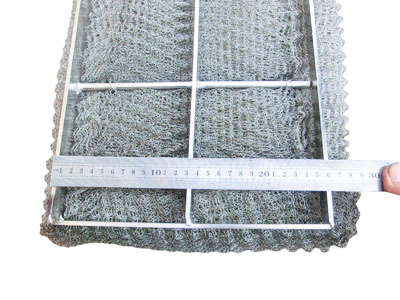
Custom Construction: Single or multi-wire knitting, co-knit composites,customized density, and custom grid support frames.
Engineering Support: Complete factor calculations, pressure drop modeling, and CAD drawings for new vessel builds or retrofits.