













How to Use and Maintain Wire Mesh Demister Pads Mist Eliminators
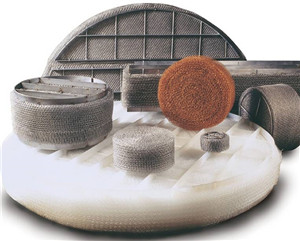
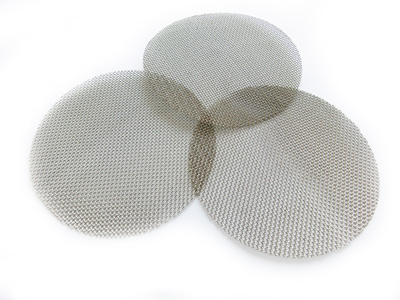
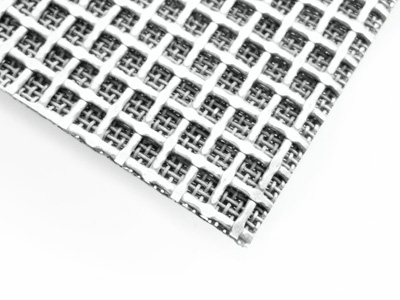
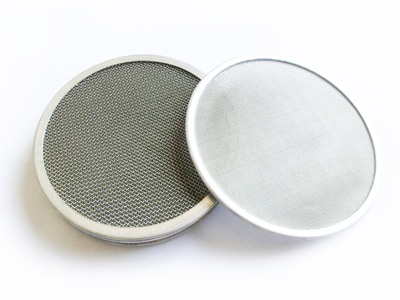
Wire mesh demister pads mist eliminators are widely regarded as reliable, low-maintenance separation devices in chemical processing, refining, and power generation. The demister pad is as effective as its installation quality and operational management.
Improper installation, unmonitored gas velocity, or neglected fouling can lead to severe liquid carryover, downstream equipment corrosion, or unscheduled vessel shutdowns.
1. Pre-Installation: Material & Process Compatibility
Before bringing a demister pad into service, confirm that the physical unit strictly matches your process.
Material Grade Verification: Verify that the mesh wire alloy (e.g., SS304, SS316, 321, Monel 400, Hastelloy C-276, Titanium) or polymer (PTFE, PP) is compatible with the corrosive species present in your process gas stream-especially during process upsets or thermal spikes.
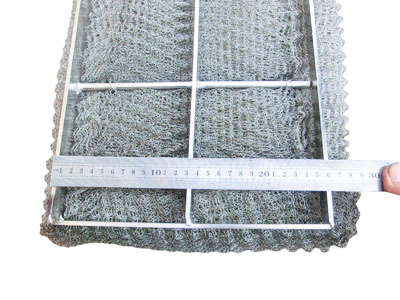
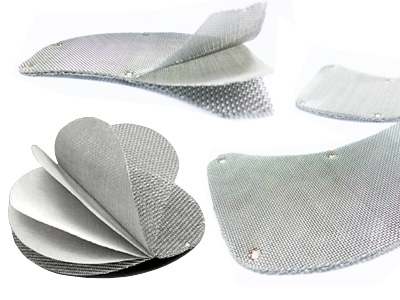
Manway Access Sizing: For large-diameter vessels, demister pads are delivered in multi-piece sectional blocks. Ensure that each section's width and length fit easily through your vessel manway without forcing or deforming the mesh matrix.
2. Installation Precision: Preventing Gas Bypass
The most common cause of premature liquid carryover in a brand-new demister pad is gas bypass around the perimeter.
Key Rules During Installation
Check Perimeter Clearance and Wall Sealing: Critical step
Ensure zero gaps between the vessel wall and the demister pad perimeter. Gas will naturally follow the path of least resistance. Even a 5 mm gap around the edge can allow up to 15% of the total gas volume to bypass the mesh entirely without liquid removal.
Ensure Correct Block Alignment: Sectional pads
When assembling multi-piece sectional pads, press adjacent sections firmly together. The mesh edges must interlock snugly to create a continuous, seamless wire matrix across the entire vessel cross-section.
Inspect Support Grids & Hold-Down Bars: Structural integrity
Demister pads must be firmly supported by top and bottom grid frames (typically made of flat bars or round bars). Securely bolt down or tie all hold-down bars to prevent the pad from lifting or displacement during high gas velocity surges or pressure spikes.
Avoid Over-Compression: Mesh integrity
Do not crush or excessively squeeze the mesh layers during handling or installation. Crushing reduces the void fraction, increasing local gas velocity and localized pressure drop.
3. Operational Management: Sizing & Monitoring Rules
Once the vessel is live, successful mist elimination relies on staying within the recommended operating envelope.
A. Operating Gas Velocity Window
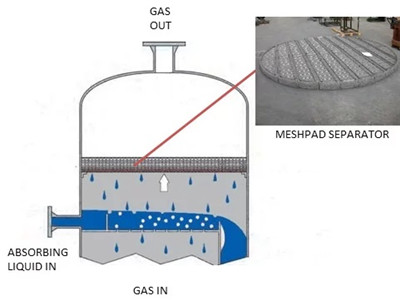
Demister pads rely on inertial impingement to capture liquid droplets. The superficial gas velocity through the vessel must remain within an optimal velocity window
If Velocity is Too Low : Droplets lack sufficient inertia to strike the wire strands. Instead, they follow the gas streamlines around the wires, leading to low separation efficiency.
If Velocity is Too High : The aerodynamic drag force exceeds the gravitational force acting on the coalesced drops. Collected liquid cannot drain downward; instead, it becomes re-entrained into the outlet gas stream.
B. Differential Pressure Monitoring
Continuous pressure drop monitoring across the demister pad is your primary indicator of performance health:
Normal Clean Operating Range: Typically 100 - 250Pa
Fouling / Clogging Alert: A steady increase in pressure drop beyond 500Pa indicates particulate buildup, salt deposition, or polymer formation.
Sudden Drop : Indicates a blow-out, dislodged sectional pad, or severe bypass gap.
4. Maintenance & Cleaning
If your process gas contains sticky polymers, suspended solids, heavy oils, or crystallizing salts, scheduled maintenance is required to prevent blinding of the mesh.
Inspection Checklist
During scheduled turnarounds, inspect the demister pad for:
Wire Thinning & Corrosion: Check wire gauge thickness using micrometers to assess corrosion allowance.
Wire Erosion: High-velocity inlet gases containing abrasives can wear down wire strands.
Solid Deposition: Look for localized crusts, salt buildup, or polymer fouling.
Pad Sagging: Check if support grids remain level or if mesh sections have settled.
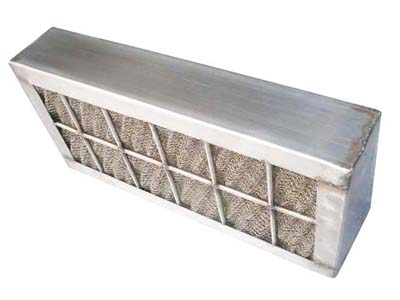
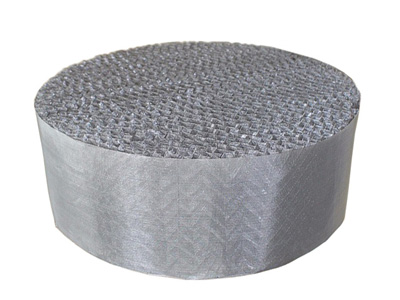
We manufacture custom-engineered round, rectangular, and multi-piece sectional demister pads in stainless steels, nickel alloys, titanium, and plastics.
Contact our technical engineering team today for custom CAD drawings, and factory-direct quotes.